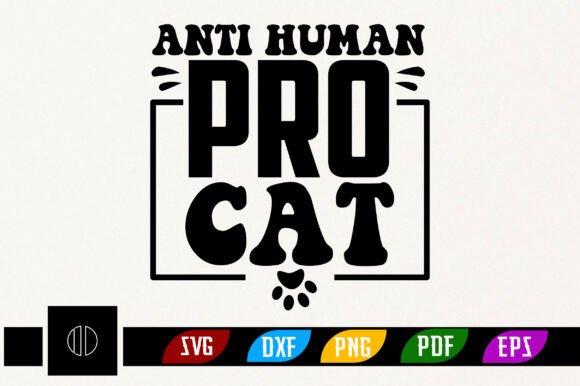
Anti Human Pro Cat SVG Design
First Impression: Bold, Playful, and Unapologetically Graphic
Opening the Anti Human Pro Cat SVG Design zip file, I immediately noticed its confident silhouette — a stylized cat with sharp angles, exaggerated posture, and that unmistakable “I’m not here to be cute” energy. It’s not a soft watercolor cat or a dainty line drawing; it’s a bold graphic built for impact. As an embroidery designer who’s stitched hundreds of animal motifs — from nursery-soft kittens to festival-ready foxes — this one stands out for its intentional restraint: minimal internal detail, strong outer contour, and smart negative space. That tells me it was conceived with stitchability in mind, not just screen appeal.
A Real-World Test: Embroidering It on a Linen-Cotton Tote Bag
Last week, I prepped a batch of natural linen-cotton tote bags for a local boutique’s summer launch. I chose the Anti Human Pro Cat SVG Design for the front panel — not as a subtle accent, but as the hero motif. Why? Because its clean lines translate beautifully into satin stitch outlines and dense fill areas without bleeding or distortion on medium-weight woven fabric. The design held up across three different hoop sizes (4x4", 5x7", and 6x10"), and when stitched in matte black thread on oat-colored linen, it read instantly — no squinting, no second glance needed. Customers at the pop-up didn’t ask “What is that?” — they grinned and said, “Yes, *that’s* my bag.” That kind of immediate recognition is gold for small shop products and personalized gifts.
Where It Shines — And Where It Needs Thought
The Anti Human Pro Cat SVG Design excels in contexts where clarity and attitude matter more than delicacy:
- Custom apparel: Works exceptionally well on crewneck sweatshirts and structured tees — especially when placed center-chest or upper-back. Its compact width avoids stretching distortion on knit fabrics.
- Embroidered patch: Perfectly sized and balanced for iron-on or sew-on patches. The solid fill areas hold shape after cutting and washing.
- Baby embroidery: Surprisingly versatile — when scaled down to 2.5" wide and stitched in soft pastel thread on cotton onesies, it reads as cheeky rather than edgy. Just avoid placing near seams or elastic where tension could distort the shape.
- Holiday embroidery & boutique branding: Paired with minimalist typography or seasonal accents (e.g., tiny embroidered holly beside the cat’s ear), it adds wit without clutter — ideal for holiday kitchen towels or gift-shop aprons.
But let’s be real: this isn’t a one-size-fits-all machine embroidery design. Use caution with:
- Thin or stretchy fabric: On lightweight jersey or rayon challis, the dense fill areas may pucker without proper cutaway stabilizer and reduced top tension.
- Curved surfaces like caps: The flat geometry doesn’t naturally wrap — best reserved for front panels of structured caps, not curved crowns.
- Dark fabric + light thread: While legible, fine inner details (like the subtle whisker line) can vanish without high-contrast thread or a white underlay stitch — test first.
- Small hoop sizes under 3.5": At tiny scales, the sharp corners begin to soften in stitch output. If you’re planning baby embroidery under 2", consider simplifying the outline manually before digitizing.
Design Integrity Meets Commercial Practicality
As an Etsy seller and craft business owner, I evaluate every digital embroidery file through two lenses: Does it stitch cleanly? and Does it sell? The Anti Human Pro Cat SVG Design passes both. Its visual personality supports brand consistency — whether you’re building a line of irreverent pet-themed apparel or curating a collection of handmade gifts for cat lovers who roll their eyes at clichés. It elevates a simple tote bag from “nice” to “conversation starter,” which directly impacts perceived value and buyer engagement.
More subtly, it builds customer trust. When a finished product looks as crisp and intentional as the digital preview — no fuzzy edges, no thread nests in corners — buyers feel confident in your craftsmanship. That matters whether you’re selling embroidered pillow covers on Instagram or supplying custom sweatshirts to a local coffee shop.
Practical Designer Notes Before You Stitch
Before adding the Anti Human Pro Cat SVG Design to your next embroidery project, take these five minutes:
- Test on scrap fabric — same type and weight as your final project. Check how the satin stitch wraps corners and how fill density behaves on your machine.
- Review stitch density in your embroidery software. If it’s over 12,000 stitches, consider reducing density slightly for breathable fabrics like cotton voile or baby knits.
- Confirm hoop size compatibility. This design fits comfortably in a 4x4" hoop at standard scale — but verify your version includes sizing guidance or test-resize before hooping.
- Inspect small details at 200% zoom: the eye shape, whisker line, and paw contours should remain distinct, not merge into blobs.
- Check licensing. Since this is a DIGITAL DOWNLOAD ONLY product with SVG and DXF files, confirm whether commercial use is permitted — especially if you plan to sell finished embroidered items or use it in printable mockups for your Etsy listings.
Finally, don’t skip the black-and-white mockup test. Render the Anti Human Pro Cat SVG Design on both light and dark backgrounds digitally before stitching. What reads as bold on screen may fade on charcoal terry cloth — and catching that early saves time, thread, and client revisions.
Final Thought: A Design That Earns Its Place
The Anti Human Pro Cat SVG Design isn’t background noise. It’s a statement piece — one that works hardest when paired thoughtfully with quality materials, intentional placement, and honest stitching. Whether you’re designing custom apparel for a boutique, prepping holiday embroidery for craft fairs, or building digital design assets for your own shop, this graphic earns its spot in your library not because it’s trendy, but because it’s reliable, recognizable, and quietly clever. Just remember: great embroidery starts long before the needle drops — it starts with knowing exactly what your design will do, and won’t do, in the real world.